What teachers can learn from students' AI conversations
By Daniel Pearson, Education AI Consultant and Director of Campus Mind. Published 4 October 2026.
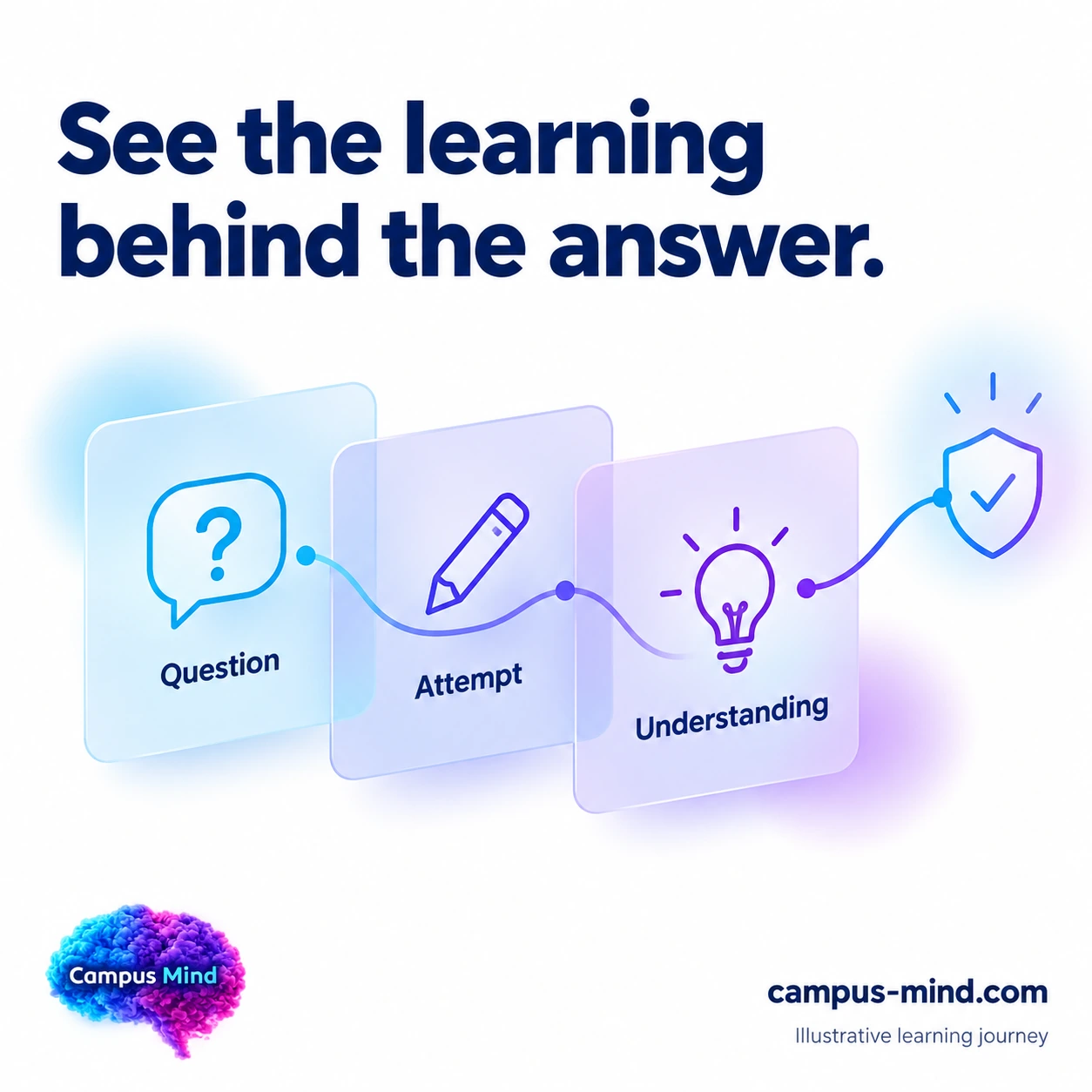
Teachers learn a great deal by watching students work. A first attempt, a pause, a question or a correction can reveal something that the finished piece alone does not show.
As students use AI, some of that process takes place in a conversation with a tool. For a school, being able to review appropriate interactions creates another opportunity to understand where a learner needs support and whether the tool is providing useful guidance.
Campus Mind gives authorised staff a way to explore interactions within the platform. The educational value comes from the questions staff ask and the action they take afterwards.
Begin with a clear educational purpose
A review should have a reason. A teacher might want to understand why a student became stuck during revision. A subject team might want to check whether an agent's guidance matches the curriculum. A school leader might want to identify which aspects of AI use need more explicit teaching.
Defining the purpose helps staff keep the review focused and useful. It also helps distinguish a learning review from other school processes, including safeguarding or assessment, which have their own responsibilities and procedures.
Look for the student's contribution
Start by asking what the student brought to the interaction. Did they attempt the task? Explain an idea? Identify uncertainty? Ask for help with a specific step?
A short question does not automatically show weak engagement. A long conversation does not automatically show learning. Context matters: the task, the student's prior knowledge and what happened in class.
For example, a learner asking for an explanation may be trying to repair a genuine gap in understanding. The useful follow-up is to ask what they now understand and what they can do with it.
Read the AI response critically
The review is also an opportunity to assess the tool. Did it address the difficulty? Was the explanation accurate and appropriate? Did it invite the student to contribute, or move too quickly to a completed answer?
If a response is unhelpful, the next step may be to refine the agent's instructions, adjust the task or show students a better way to request support. This makes oversight a source of practical improvement.
The Department for Education's guidance on generative AI highlights the need for professional judgement when checking AI output. It also recognises that evidence about the benefits and risks of pupil-facing AI is still developing. That is a reason to review carefully and learn from use in context.
Follow the response through to the next attempt
The most revealing part may come after the AI has replied. Does the student change an answer, explain a choice or try a more demanding task? Do they question something that seems wrong?
These signals can help a teacher decide what to ask next. They should be treated as clues to explore rather than proof of understanding. A conversation cannot establish everything a learner knows.
Pair the review with classroom work and a short discussion. Asking a student to explain a step without the tool, or apply an idea to a related question, may provide a clearer picture.
Make oversight understandable
Students should understand the school's arrangements for reviewing AI use. Explain who may access interactions, why a review might take place and how information will be used, in language appropriate to their age. Schools should also establish appropriate access, retention and data-handling arrangements.
These decisions belong within the school's wider policies and responsibilities. A platform feature alone does not establish compliance or replace safeguarding processes. Staff should know where to seek advice and how to respond if an interaction raises a concern.
For routine learning reviews, use the information necessary for the purpose and avoid circulating identifiable conversations more widely. Anonymous examples can support staff training, provided the school has checked that the material is suitable to share.
Turn observations into better teaching
A useful review ends with an action. If several students ask AI to plan revision without contributing their own priorities, the next lesson might model how to choose a starting point. If an agent repeatedly gives too much help, staff can revisit how its guidance is configured.
The EEF's metacognition guidance recommends explicitly teaching strategies for planning, monitoring and evaluating learning within subjects. That offers a helpful lens for deciding what guidance students need. Classroom evidence and the student's explanation help teachers judge how those skills are developing.
A manageable starting point for school teams
Choose one agreed learning activity. Decide what good use of AI would look like, review an appropriate sample of interactions and compare what you notice with students' work and explanations. Record one or two changes to try, then return to them.
This review approach makes discussion more specific: which prompts helped, where support was missing and what students should practise next.
Read about AI scaffolding that leaves room for student thinking, or see our school implementation case study. To explore how guided learning and staff oversight could fit together in your setting, visit Campus Mind.